Free Calculator
Heat Treat Temperature Calculator
Turn a steel grade and a target hardness into an austenitizing temperature, a tempering range, soak times and the risks to watch for.
Austenitizing temperature
How the numbers work
Hardness comes from two things: how much carbon is dissolved into the austenite before you quench, and how fast you cool it. Austenitizing below the recommended range leaves carbon undissolved and you never reach the target hardness. Austenitizing above it dissolves more carbon but grows the grain, and coarse grain means a brittle edge that will not hold up.
Tempering trades hardness for toughness. Every 10–15 °C of additional tempering temperature typically costs about one HRC point, so the tempering temperature is the dial you use to land on a target. Two one-hour cycles are standard because a single cycle leaves retained austenite that can transform later — and that is what makes a blade that seemed fine go brittle weeks later.
Reference values used
| Magnet loses attraction | ≈ 770 °C — a lower bound only, not a setpoint |
|---|---|
| Decalescence (shadow) | Rough indicator of the transformation range |
| Recommended soak at temperature | 5–10 min once through-heated |
| Tempering, standard practice | 2 × 1 hour, cool to room temp between |
| Hardness loss per +10 °C temper | ≈ 0.7–1 HRC |
| Typical knife hardness | 58–62 HRC |
Related reading
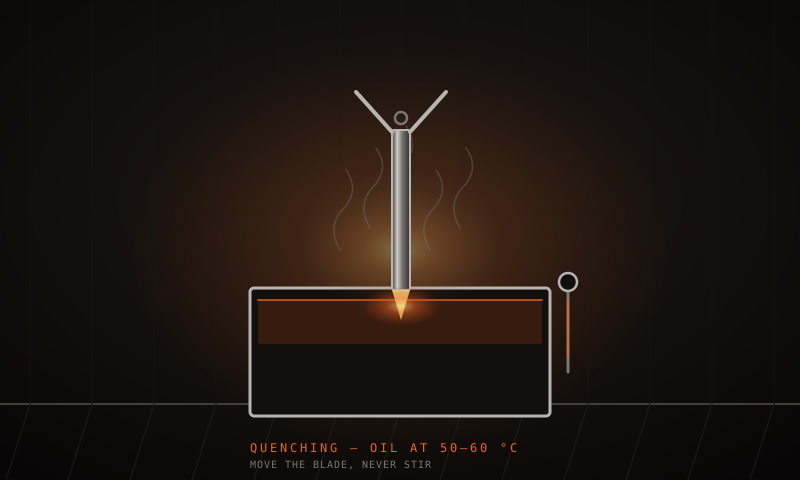
Heat Treatment Explained: Quenching and Tempering
Hardening is a race between two transformations. Get the temperature and the quench right and the steel becomes martensite. Get them wrong and it stays soft. Here is the sequence that works, with real numbers.
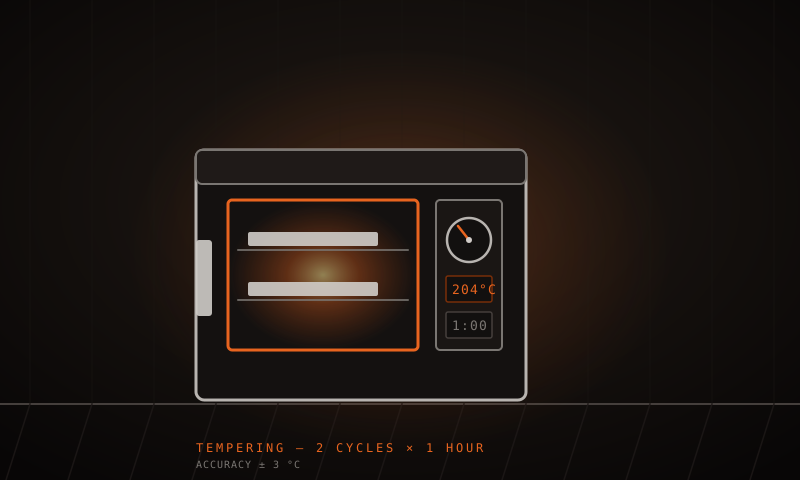
Understanding Steel: Carbon, Alloy, and Tool Steels
Carbon content decides whether steel can harden at all. Alloying elements decide how it behaves while you work it. Knowing the difference is what lets you choose a steel instead of guessing at one.
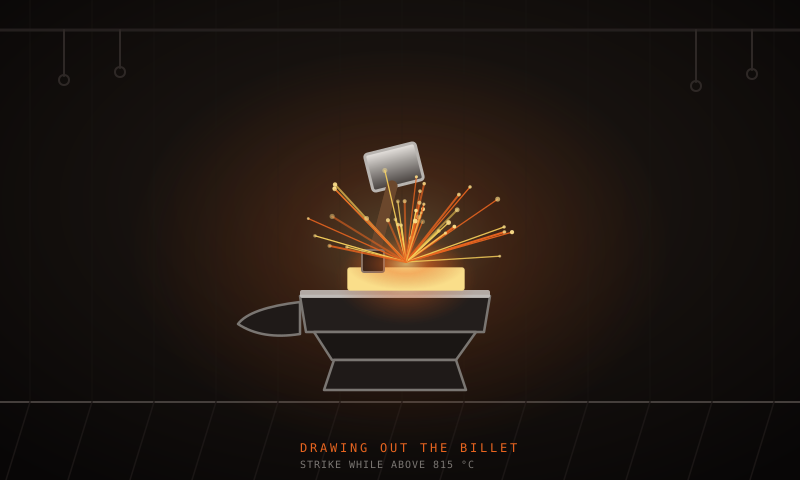
Forging Basics: Heating, Hammering, and Shaping
Forging is not about hitting hard. It is about heat, hammer control and knowing when to stop. This covers the working temperatures, the hammer work, and the faults that show up in every beginner blade.