Reference Data
Knife Steel Database
Twenty steels compared on the numbers that actually decide how a blade behaves — carbon content, hardenability, toughness, wear resistance and the heat treatment each one wants. Click any row to expand it, or add up to three to the comparison.
| Grade | Family | Carbon | Working HRC | Toughness | Wear resistance | Hardenability | Quench | Compare |
|---|---|---|---|---|---|---|---|---|
| 5160 | Alloy | 0.60 % | 55–58 HRC | High | Medium | Medium | Fast or medium oil | + |
Heat treatment
Strengths
Limitations
Best for
Related toolsAISI 5160 Spring Steel. Spring steel, and it acts like it. 5160 is about as forgiving as a blade steel gets: it shrugs off abuse, bends rather than snaps, and survives heat-treatment mistakes that would ruin a higher-carbon steel. The trade-off is edge-holding, since it is soft enough to dull sooner than 1084 or 1095. Perfect for big choppers, machetes and camp knives. |
||||||||
| AEB-L | Stainless | 0.60 % | 59–61 HRC | High | Medium | High | Plate quench | + |
Heat treatment
Strengths
Limitations
Best for
Related toolsAEB-L Fine-Grain Stainless Steel. A stainless with a secret: it is essentially a razor-blade steel, so it has very fine grain and takes a keener, tougher edge than most stainless grades. It is tough, easy to grind thin, and hardens cleanly with a plate quench. It is not especially wear-resistant and it will stain if abused. Excellent for kitchen knives and thin, slicey blades. |
||||||||
| 12C27 | Stainless | 0.60 % | 57–59 HRC | High | Medium | High | Plate quench | + |
Heat treatment
Strengths
Limitations
Best for
Related tools12C27 Martensitic Stainless Steel. The simplest stainless in the table, and one of the most forgiving. Low carbon and moderate chromium mean it is tough, easy to grind, easy to sharpen and very resistant to corrosion, though it will not hold an edge as long as harder stainless grades. It plate-quenches without drama and rarely cracks. A great first stainless for thin utility blades. |
||||||||
| 8670M | Alloy | 0.67 % | 56–59 HRC | High | Medium | Medium | Fast oil | + |
Heat treatment
Strengths
Limitations
Best for
Related toolsAISI 8670M Modified Spring Steel. A modified spring steel that sits close to 5160 but with a touch more carbon and alloy, so it holds an edge a little better while staying remarkably tough. It forges and heat-treats easily and is very hard to break. Because it is not as widely stocked as 5160 or 1084, sourcing can be awkward. A good choice for hard-use blades you would rather sharpen than replace. |
||||||||
| 15N20 | Alloy | 0.75 % | 57–59 HRC | High | Low | Low | Fast oil | + |
Heat treatment
Strengths
Limitations
Best for
Related toolsAISI 15N20 Nickel-Bearing Steel. Not usually a stand-alone blade steel. 15N20 is the bright, nickel-bearing layer in most pattern-welded damascus, chosen because it contrasts with 1084 in the etch and welds cleanly to it. On its own it is a fine, tough, shallow-hardening steel that takes a keen edge but loses it faster than high-carbon grades. Think of it as the partner steel, not the hero. |
||||||||
| 80CrV2 | Alloy | 0.80 % | 58–60 HRC | High | Medium | Medium | Fast oil | + |
Heat treatment
Strengths
Limitations
Best for
Related tools80CrV2 Chrome-Vanadium Forging Steel. A quietly excellent forging steel. Small chromium and vanadium additions make 80CrV2 noticeably tougher and a little more wear-resistant than plain 1084, while staying easy to forge and heat-treat in a simple shop. It hardens deep enough for most knives and resists cracking well. It is neither stainless nor exotic, but it produces dependable working blades with little drama. |
||||||||
| 3V | Tool | 0.80 % | 58–60 HRC | High | High | High | Air or plate quench | + |
Heat treatment
Strengths
Limitations
Best for
Related tools3V Powder-Metallurgy Tool Steel. A powder-metallurgy tool steel built around toughness. 3V is tough enough to survive serious impact while still holding an edge far longer than simple carbon steels, and its chromium content makes it semi-stainless. It is expensive, hard to grind and cannot be forged at home, so it is usually bought as finished bar stock. For hard-use working knives it is hard to beat. |
||||||||
| 1084 | Carbon | 0.84 % | 58–60 HRC | High | Medium | Low | Fast oil | + |
Heat treatment
Strengths
Limitations
Best for
Related toolsAISI 1084 High-Carbon Steel. The default answer for a first knife. 1084 is simple enough that a beginner can heat-treat it in a coal forge with a magnet and a bucket of fast oil, yet it takes a keen edge and holds it well enough for real work. It hardens easily, forges cleanly and forgives sloppy temperature control. It will not win a wear-resistance contest against modern alloy steels, and it rusts if ignored. Learn the basics here, then move on. |
||||||||
| O1 | Tool | 0.90 % | 58–61 HRC | Medium | Medium | Medium | Medium oil | + |
Heat treatment
Strengths
Limitations
Best for
Related toolsAISI O1 Oil-Hardening Tool Steel. The oil-hardening tool steel most makers graduate to after 1084. O1 hardens reliably, machines and forges well, and gives a good balance of toughness and edge-holding. It is forgiving enough for a careful beginner but rewards better temperature control. It resists neither rust nor heavy wear, yet it is consistent and easy to get good results with. |
||||||||
| 1095 | Carbon | 0.95 % | 57–60 HRC | Medium | Medium | Low | Fast oil or water | + |
Heat treatment
Strengths
Limitations
Best for
Related toolsAISI 1095 High-Carbon Steel. A step up from 1084 in carbon and in temper. 1095 takes a very sharp edge and holds it longer, but the extra carbon makes it fussier: it needs a fast quench and can crack if rushed or quenched from too hot. Thin sections are prone to warping. It is still a carbon steel, so it rusts and stains. Best where slicing performance matters more than brute toughness. |
||||||||
| W2 | Tool | 1.00 % | 59–62 HRC | Medium | Medium | Low | Water or brine | + |
Heat treatment
Strengths
Limitations
Best for
Related toolsAISI W2 Water-Hardening Tool Steel. The classic water-hardening tool steel, and the reason old smiths earned their scars. W2 takes a very fine, hard edge and polishes beautifully, which is why it is a favourite for Japanese-style and competition blades. It also demands respect: water or brine quenching is fast enough to crack a blade that is too hot, too thick or unevenly ground. Not a beginner steel. |
||||||||
| A2 | Tool | 1.00 % | 59–61 HRC | Medium | High | High | Air or plate quench | + |
Heat treatment
Strengths
Limitations
Best for
Related toolsAISI A2 Air-Hardening Tool Steel. An air-hardening tool steel that trades a little toughness for excellent wear resistance and near-zero quench distortion. Because it hardens in still air, thin blades barely move and cracking is rare, a real advantage for long, thin knives. The catch is that it is difficult to forge and needs accurate austenitizing and a proper soak. Semi-stainless at best. |
||||||||
| 52100 | Alloy | 1.00 % | 60–62 HRC | High | High | Medium | Fast oil | + |
Heat treatment
Strengths
Limitations
Best for
Related toolsAISI 52100 Bearing Steel. Bearing steel, and a favourite of makers who want toughness and edge-holding together. 52100 forges well, hardens in fast oil, and produces a fine-grained blade that resists chipping while cutting aggressively. It needs a careful normalising routine and a decent soak, and it will rust like any carbon steel. Worth the effort once you can control your heat. |
||||||||
| VG-10 | Stainless | 1.00 % | 59–61 HRC | Medium | High | High | Plate quench | + |
Heat treatment
Strengths
Limitations
Best for
Related toolsVG-10 Cobalt-Alloyed Stainless Steel. The stainless behind a generation of Japanese kitchen knives. VG-10 takes a very keen edge, resists corrosion well and holds that edge through long slicing sessions. The trade-off is that it is somewhat brittle at high hardness and can chip if you twist or chop carelessly. It is also difficult to forge or heat-treat at home; most makers buy it as finished stock. |
||||||||
| CruForgeV | Tool | 1.00 % | 59–61 HRC | High | High | Medium | Fast oil | + |
Heat treatment
Strengths
Limitations
Best for
Related toolsCruForgeV Carbon-Vanadium Forging Steel. A forging steel designed to be forged: it moves well under the hammer and was made to give carbon-steel toughness with better wear resistance than plain 1084 or 1095. The vanadium refines the grain and helps the edge hold up. It is fussier about heat-treatment than simple steels and needs a fast oil quench. Rewarding once your forging is consistent. |
||||||||
| 154CM | Stainless | 1.05 % | 58–61 HRC | Medium | High | High | Air or plate quench | + |
Heat treatment
Strengths
Limitations
Best for
Related tools154CM Molybdenum Stainless Steel. A classic American stainless that improves on 440C with molybdenum for better toughness and wear resistance. It hardens in air or between plates, grinds well and takes a keen, stable edge. It is not as stain-resistant as the 17 % chromium grades, and it needs a proper soak to dissolve its carbides. A dependable all-round stainless. |
||||||||
| N690 | Stainless | 1.07 % | 58–60 HRC | Medium | High | High | Plate quench | + |
Heat treatment
Strengths
Limitations
Best for
Related toolsN690 Cobalt-Alloyed Stainless Steel. An Austrian stainless that behaves like a refined 440C, with cobalt and molybdenum adding wear resistance and edge stability. It takes a polished edge well, resists corrosion strongly and is reasonably tough for its class. It needs a plate quench and a cold treatment to give its best. A solid choice for outdoor and general-purpose stainless knives. |
||||||||
| 440C | Stainless | 1.10 % | 56–59 HRC | Medium | High | High | Air or plate quench | + |
Heat treatment
Strengths
Limitations
Best for
Related toolsAISI 440C High-Chromium Stainless Steel. The old standard stainless. 440C has been making knives for decades: it is genuinely rust-resistant, takes a fine edge, and is cheap and widely available. It is also relatively coarse-grained, so it is less tough than modern stainless grades and can be chippy at high hardness. Good for kitchen and utility blades, less so for hard-chopping knives. |
||||||||
| 1.2519 | Tool | 1.10 % | 59–62 HRC | Medium | High | Medium | Fast oil | + |
Heat treatment
Strengths
Limitations
Best for
Related tools1.2519 Chromium-Tungsten Tool Steel. A German cold-work tool steel that sits somewhere between O1 and a high-carbon forging steel. It forges reasonably well, hardens in oil, and offers good wear resistance and edge stability thanks to its chromium, tungsten and vanadium. It is not stainless and is less common in English-speaking markets, so sourcing takes effort. A capable steel for keen, hard-working edges. |
||||||||
| D2 | Tool | 1.50 % | 58–61 HRC | Low | Very High | High | Air or plate quench | + |
Heat treatment
Strengths
Limitations
Best for
Related toolsAISI D2 High-Chromium Tool Steel. The wear-resistance specialist. With 12 % chromium and 1.5 % carbon, D2 holds an edge through abrasive work better than almost anything in this table, and it is semi-stainless to boot. It is also chippy: the coarse carbide structure makes a thin, hard edge fragile, so it suits slicing and skinning more than chopping. Hard to forge and hard to grind. |
||||||||
No steels match those filters
Try clearing the search box or setting the family filter back to “All families”.
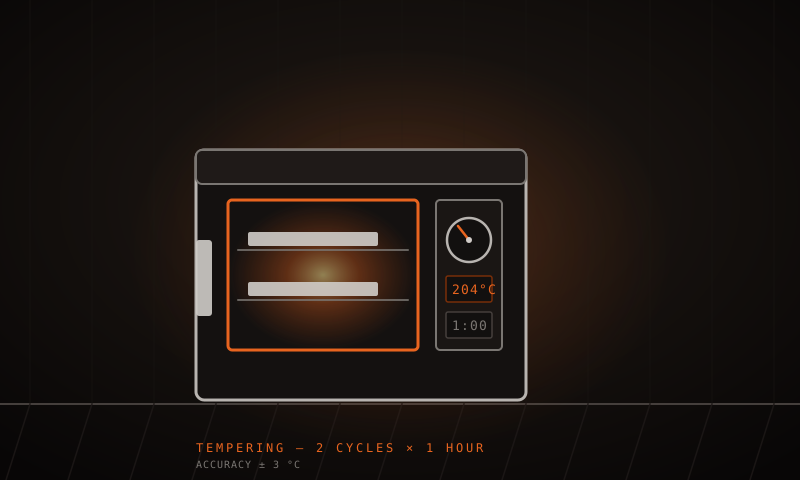
Understanding Steel
What carbon, alloying elements and the tool-steel families actually do to a blade.
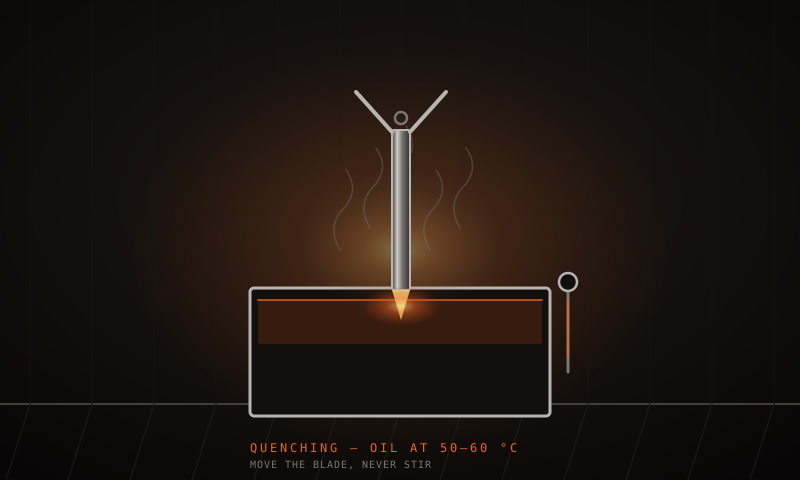
Heat Treatment Explained
Quenching and tempering, in the order you have to do them and why each matters.
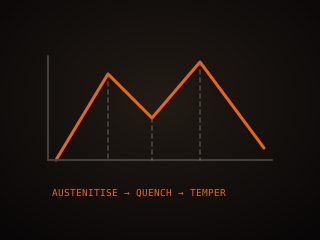
Heat Treat Calculator
Turn a steel grade and a target hardness into temperatures and soak times.