Tool Categories
Five stages, from bar stock to finished knife
Each stage has its own tools and its own failure modes. Start where your current problem is.
Forge & Heating
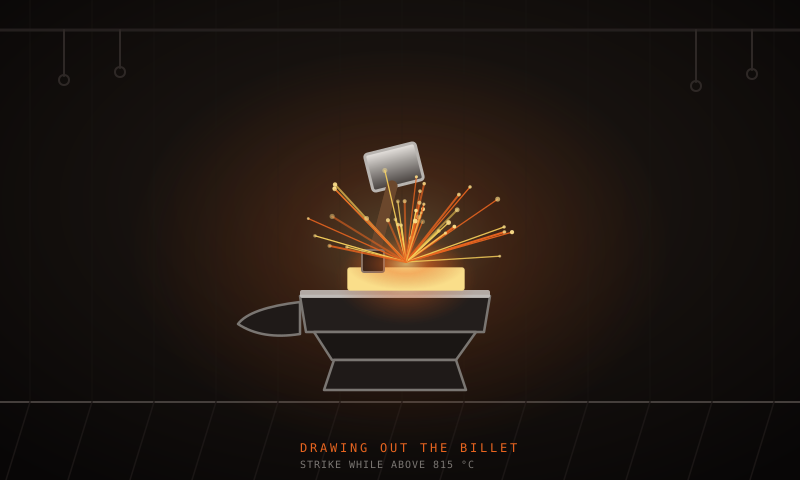
Bring steel to forging temperature — gas and coal forges, burners, blowers, and the refractories that hold the heat in.
Hammers & Anvils
Move hot metal. Hammers, anvils, stands, tongs, and hardy tools — the mass and the grip that turn a blow into shape.
Grinding & Shaping
Cut the final geometry. Belt and angle grinders, files, stones, belts, and wheels — where a blade’s edge is actually decided.
Heat Treatment
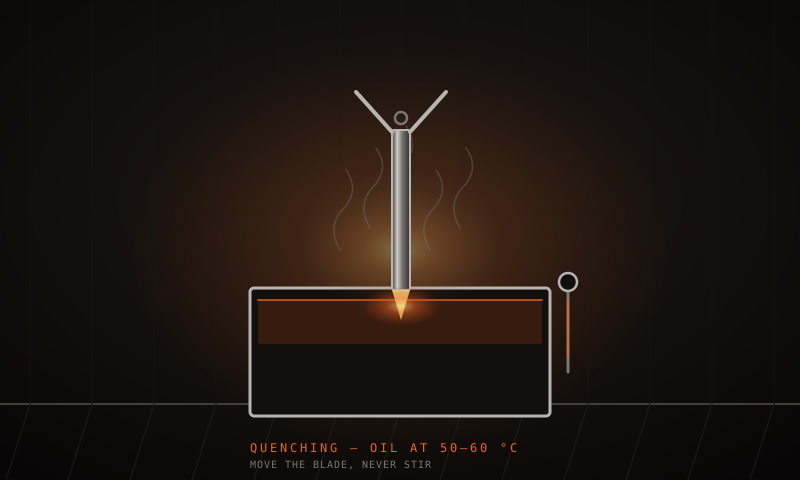
Set the hardness. Quench oils, tempering ovens, temperature indicators, and hardness testing — the step that makes or breaks a blade.
Handle & Finishing
Finish the knife. Handle materials, guards, pins, epoxy, and sheaths — the parts a user actually touches every day.
The Process
Four steps from a bar of steel to a finished blade
The order matters. Skipping normalizing or rushing the temper is how good grinding gets wasted.
 STEP 1
Forge & Shape
Heat the steel into its forging range and move it with hammer and anvil. Refine the profile while it is hot, then normalize before any grinding.
 STEP 2
Grind & Profile
Establish the bevels and the edge geometry on a belt grinder, then refine with stones. This is where the cutting performance is decided.
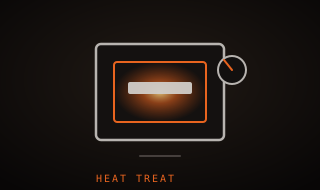 STEP 3
Heat Treat
Austenitize, quench, then temper twice. Hardness, toughness and edge stability all come from this step — and it is the least forgiving.
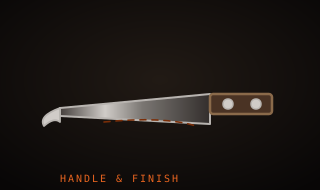 STEP 4
Handle & Finish
Fit the guard, scales and pins, shape the handle to the hand, and finish with a sheath. The part the user touches every day.
3D Studio
Practise the motion before you spend the steel
Four interactive simulators built with real material behaviour in mind — a billet that plastically deforms and loses heat, a bevel cross-section that changes as you grind, a heat-treat curve you can plot, and a handle you can assemble piece by piece.
These are educational models, not process simulation. Real results depend on your steel, your equipment and your technique — always follow the manufacturer’s instructions.
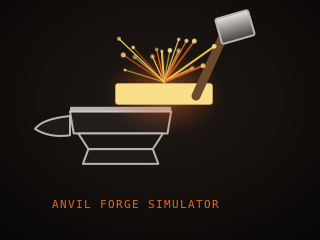 Anvil Forge Simulator
 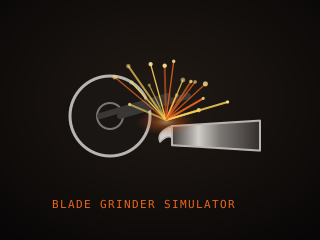 Blade Grinder
 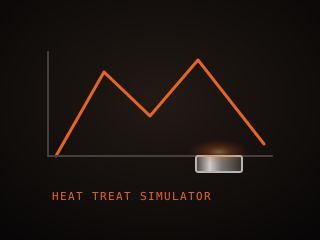 Heat Treat Simulator
 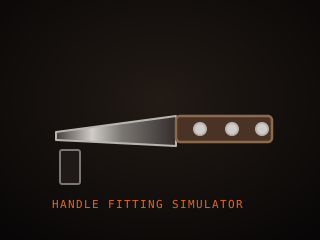 Handle Fitting
 Most Referenced
The tools people look up first
The nine references readers open most often, ranked by demand across the whole catalogue.
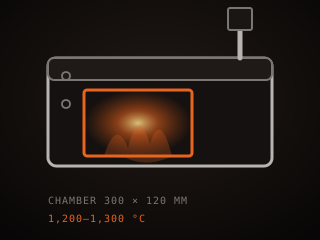
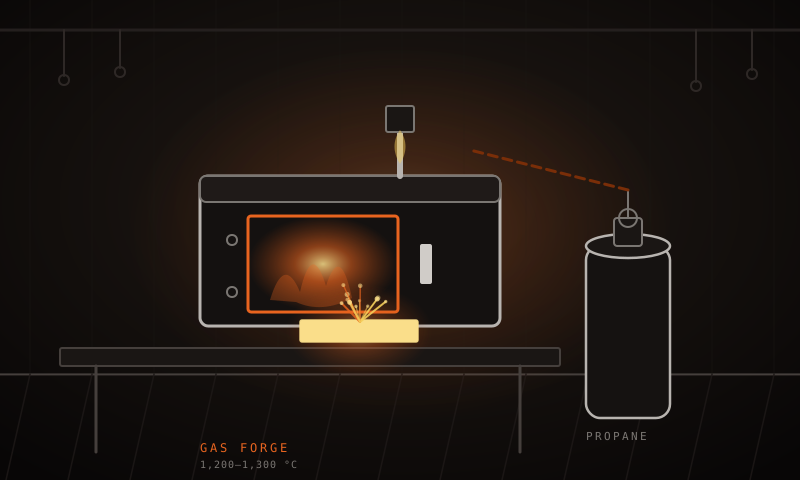
Gas Forge
Propane-fired chamber for bringing steel to forging temperature.
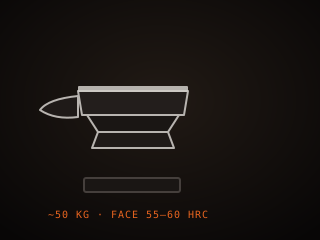
Anvil
Massive steel block that provides the reaction surface for hammering.
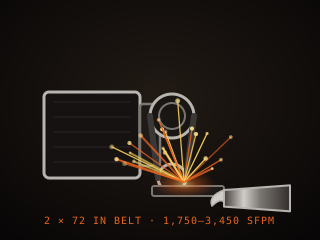
Belt Grinder
Motorized abrasive belt machine for shaping and finishing blades.
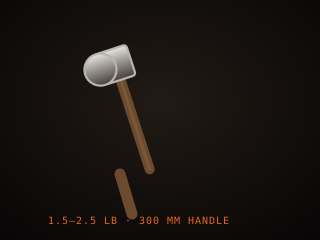
Blacksmith Hammer
Primary striking tool for moving hot steel on the anvil.
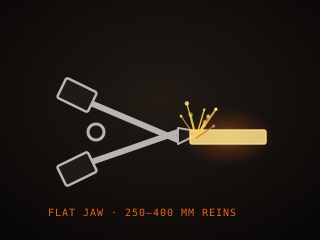
Blacksmith Tongs
Gripping tool for holding hot steel safely at the anvil and forge.
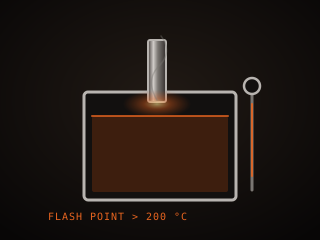
Quenching Oil
Heat-transfer fluid that cools steel fast enough to harden it.
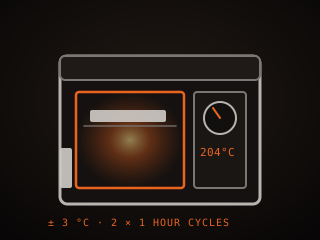
Tempering Oven
Temperature-controlled oven for precise tempering and heat treatment.
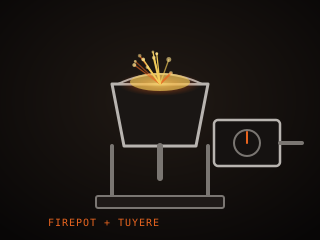
Coal Forge
Solid-fuel hearth that burns coal or coke for traditional forging.
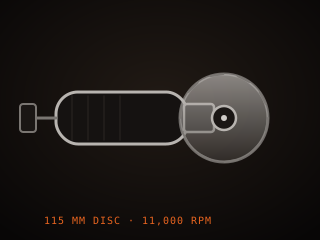
Angle Grinder
Handheld power tool for cutting and rough grinding metal.
Free Calculators
Numbers you can use at the bench
Three calculators that answer the questions that actually come up mid-build.
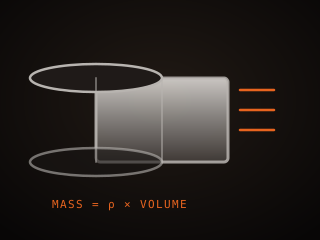
Steel Weight & Volume
Work out the mass and volume of a bar, billet or finished blank before you buy or cut it.
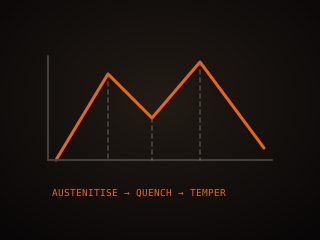
Heat Treat Temperature
Austenitizing temperature, tempering range, soak time and risk notes for your steel and target hardness.
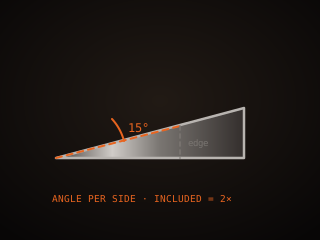
Blade Geometry
Edge thickness, grind width and belt grit progression for a target bevel angle and grind type.
From the Blog
Guides worth reading before you start
Long-form, practical, and specific about temperatures, grits and angles.
Knife Maintenance and Sharpening
An edge fails in predictable ways and each one has a different fix. This covers the angles for different knives, a stone progression that works, and how to keep a carbon steel blade from rusting.
Setting Up a Home Forge
Where you put the forge matters more than which forge you buy. This covers siting and ventilation, gas versus coal, anvils and stands, tooling, quench setup and a layout that works in a small shop.
Bladesmithing Safety: Heat, Dust, and PPE
The forge, the grinder and the quench tank each have their own way of hurting you. This is what actually goes wrong in a knife shop, and the specific habits that stop it happening to you.
Not sure where to start?
The beginner’s guide walks through the minimum tool set, the first steel to buy, and the mistakes that waste the most time and money.