Hammers & Anvils · Shape
Blacksmith Tongs
Blacksmith tongs hold hot steel at the forge and anvil, and their jaws must match the shape of the work. A snug, matched grip gives control and safety, while a loose universal pair lets hot steel slip and rotate.
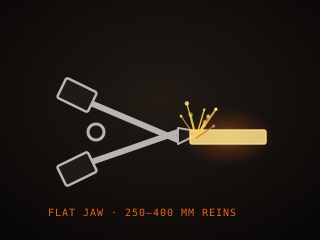
Specifications
| Jaw type | Flat, V, box, or wolf-jaw |
|---|---|
| Reins | Long, for hand clearance |
| Boss | Riveted or bolted pivot |
| Steel | Mild or medium-carbon steel |
| Fit | Matched to stock size |
| Use | Holding hot steel |
Technical parameters
| Rein length | 350–500 mm |
|---|---|
| Jaw opening | Matched to stock, 5–40 mm |
| Body steel | Mild steel, forged and riveted |
| Boss rivet | 8–12 mm |
| Jaw thickness | 6–12 mm |
| Typical set | 3–6 pairs cover most work |
| Grip style | One hand, near the boss |
| Working heat | Jaws stay below tempering heat |
Overview
Blacksmith tongs are the hand that holds the steel. They reach into the forge, pull out hot stock, and keep it under control on the anvil, so their jaws must match the shape of the work. Tongs come in many patterns, each shaped for a specific stock: flat jaws for bar, V-jaws for round, box jaws for square, and pick-up or wolf-jaw tongs for grabbing a specific size. The reins are long enough to keep your hand away from the heat, and the pivot, called the boss, sets how much leverage and jaw travel you get.
Choosing tongs is mostly about fit. The jaws should close around the stock without gaps, because a loose grip lets hot steel rotate or slide, and that is how burns and dropped blades happen. For blade work, a few good pairs cover most needs: flat-jaw tongs for bar stock and tangs, V-jaw or bolt tongs for round stock, and a pair of wolf-jaw or pickup tongs for holding a blade by the ricasso. Tongs are also easy to make, and many smiths forge their own to fit a specific size rather than buying a large set.
In the workflow tongs are used at every stage that involves hot metal: pulling stock from the forge, holding it on the anvil, and moving it to the quench. Their fit and your grip determine how precisely you can place a blow, so a matched pair of tongs is worth more than an expensive hammer. Because a blade gets long and awkward, smiths often hold the work with tongs in one hand and support or guide it with the other, and for heavy stock a striker or a hold-down takes over. Keep the jaws and boss cool and free of scale.
Where it fits
This tool belongs to the Shape stage of the build.
Safety
- Match the jaws to the stock and close them fully, because a slipping tong grip drops hot steel onto feet, legs, and the floor.
- Keep the reins cool and grip near the boss for control; long hot reins or a loose grip let the steel swing unexpectedly.
- Inspect the boss and rivet for looseness, since a failing pivot can let a heavy billet twist free at the worst moment.
Using it well
- Fit the jaws to the stock: a pair that closes snugly on the bar gives far better control than a loose, general-purpose grip.
- Grip near the boss when you need control and slide your hand back when you need reach into the fire.
- Make or adjust a pair for each awkward shape, since a matched jaw is faster and safer than fighting a universal grip.
- Cool the jaws in water between heats and knock scale off the boss, so the pivot stays free and does not seize.
Compatible steels
Steels this tool is commonly used with, and which suit its working range.
Related processes
Related tools
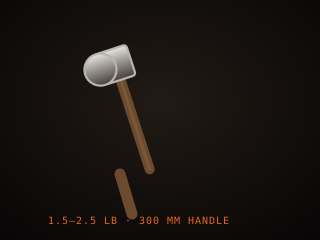
Blacksmith Hammer
Primary striking tool for moving hot steel on the anvil.
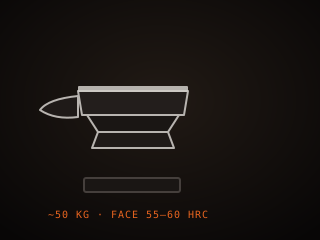
Anvil
Massive steel block that provides the reaction surface for hammering.
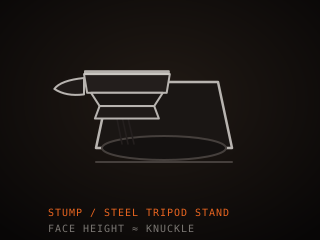
Anvil Stand
Rigid base that holds the anvil at working height and damps ring.
Quenching Oil
Heat-transfer fluid that cools steel fast enough to harden it.
Further reading

How to Start Knife Making: A Beginner’s Guide
Knife making rewards patience more than tools. Here is the honest starting path: one simple steel, a handful of files, and the three skills that actually decide whether your first blade works.
Handle Assembly: Materials, Pins, and Finish
A handle is where the knife meets your hand and the part people notice first. This covers materials, tang prep, epoxy, pins and bolts, and the finishing steps that make it feel like one piece.
Making a Leather Sheath: Step by Step
A sheath is a fitted leather case made around the knife, not a pouch the knife is dropped into. This walks through the pattern, the welt, wet forming and the stitching that holds it together.