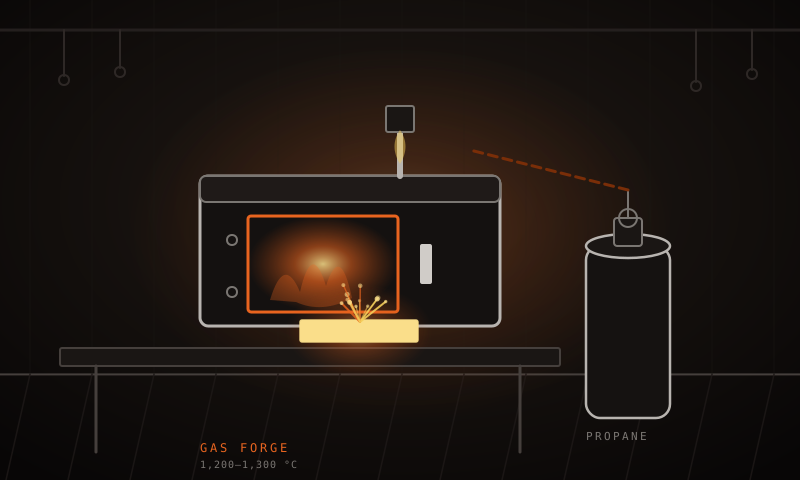
Bladesmithing combines three hazards that are individually manageable and genuinely dangerous when they overlap: fire, fine dust and hot metal. A knife shop is not unusually dangerous, but the failure modes are unforgiving. Carbon monoxide does not smell. Metal dust does not look like a fuel. Quench oil does not warn you before it lights.
What follows is not a disclaimer. It is the specific list of things that put people in hospital or burn down shops, roughly in order of how likely they are to happen to a hobbyist working alone in a garage. Read it once, then set up your shop so that the safe way is also the easy way. A shop arranged well is safer than a shop that depends on remembering to be careful.
Carbon monoxide: the invisible one
Any fuel-burning forge produces carbon monoxide, and a propane forge in a closed garage can reach dangerous concentrations in minutes. CO is colorless and odorless. The early symptoms are a headache, drowsiness and a feeling that you just need to sit down, which is exactly the feeling you might ignore in the middle of a heat.
Forge outdoors, or in a space with real through-ventilation: an opening on one side and another on the opposite side, with the forge positioned so exhaust leaves rather than circulates. A single open window in a closed garage is not ventilation, it is a false sense of security. If you cannot forge outdoors, fit a CO alarm rated for the space and treat it as a hard stop rather than a suggestion.
- Forge outdoors whenever you can. It removes the problem instead of managing it.
- If indoors, use cross-ventilation: air in on one side and out on the other, with the forge between them.
- Fit a carbon monoxide alarm. It costs little and it is the only thing that will warn you before you stop noticing.
- Never leave a forge burning unattended, and never sleep in a space where a forge has been running.
- Headache, nausea or drowsiness while forging means get outside into fresh air immediately.
Propane: leaks, hoses and flashback
Propane is heavier than air, so a leak settles into low spots and collects rather than dispersing. A cylinder stored indoors with a slow leak can fill a garage floor with a flammable layer. Store cylinders outdoors or in a well-ventilated place, upright, away from the forge, and never store them near a heat source.
Check your connections with soapy water every time you set up. Bubbles mean a leak. Inspect hoses for cracks, especially where they bend at the regulator and at the burner, and replace anything that has hardened or checked. Use a hose rated for fuel gas rather than whatever was on the shelf, and keep it clear of hot surfaces and sharp edges.
Leak test before every session
Brush soapy water on every joint with the gas on and the burner off. Bubbles mean a leak. Tighten, retest, and replace any fitting that will not seal.
Inspect the hose
Look for cracking, hardening or flattening where the hose bends. Fuel hose degrades from heat and sunlight, and a hose that looks fine can fail at the crimp.
Open the valve slowly
Crack the cylinder valve and let the line pressurize gradually. Slamming a valve open sends a pressure spike through the regulator and the hose.
Light before you turn the gas up
Have your ignition ready, open the gas a little, and light immediately. Letting gas run before you light it is how you build a pocket that flashes back.
Shut off at the cylinder
When you finish, close the cylinder valve first and let the line burn out. Leaving pressure in the hose overnight is how slow leaks start.
Coal forges: smoke, sulphur and clinker
A coal forge is the traditional setup and it produces its own specific set of hazards. Burning coal gives off smoke, carbon monoxide and sulphur compounds, especially at startup and while the fire is still green. Coal smoke is not merely unpleasant. It is a lung irritant and a long-term risk, and it carries fine particulates that settle throughout a shop.
Never burn coal indoors without serious extraction and a dedicated flue. Even outdoors, stand out of the smoke plume and position yourself so the wind carries it away from you. Coal also produces clinker, the fused stony mass that forms in the fire, which has to be dug out of the pot. Clinker is hot, it can be sharp, and it belongs in a metal container, never a plastic bucket.
- Never burn coal in an enclosed space. It needs a flue or full outdoor ventilation.
- Stand upwind and out of the plume, especially at startup when the fire is green and smoking heavily.
- Let the fire come up to a clean, bright state before you put steel in it, rather than working in a smoky fire.
- Dig clinker out with a proper rake or slice and put it straight into a metal container, never plastic.
- Extinguish a coal fire with water from a distance, and expect a large amount of steam and flying ash.
Refractory fibre and shop dust
Ceramic fibre insulation, the soft white blanket used to line gas forges, is a genuine respiratory hazard. The fibres are fine, they persist in the air, and they are classified as a possible carcinogen when inhaled. Fibres break off from handling, from cutting, and from the surface of a lining that has not been rigidized.
Buy rigidized or coated lining where you can, and coat any bare fibre with a refractory wash before you fire the forge. Wear a P3 respirator whenever you handle, cut or replace the lining, and wear long sleeves so the fibres do not sit on your skin. Work outside or with extraction, and do not use a household vacuum to clean up fibre dust, because it will put the fibres straight back into the air.
Grinding: sparks, wheel burst and metal dust
Grinding is where most shop injuries actually happen, because it is the task you do most often and the one that feels routine. The hazards are specific: sparks that ignite dust, a belt or wheel that grabs the work, a wheel that fails at speed, and fine metal dust that is genuinely combustible. None of those are hypothetical, and every one of them becomes more likely when you are tired or rushing to finish a blade.
Fine steel and aluminum dust, mixed with the lint and paper that collect around a grinder, will burn. Never grind near a forge mouth, a quench tank or any open flame, and never let dust accumulate around a running machine. Aluminum dust is particularly dangerous, so if you grind aluminum keep it separate and clean it up immediately.
Wear eye and face protection
Safety glasses alone are not enough for grinding. Add a face shield, and keep the shield clean so you actually wear it instead of pushing it up onto your forehead.
Check the wheel before running
Inspect bonded wheels for cracks, chips or water damage, and check the rated speed against the machine. A wheel that fails at speed throws fragments with lethal energy.
Stand out of the line of rotation
Never stand directly in front of a wheel or belt that could throw the work or a fragment. Position yourself to the side, and keep every guard in place.
No gloves near rotating abrasives
A glove catches and pulls your hand in. Bare hands with a secure, planned grip are safer on a belt grinder than gloved hands are.
Control the dust
Use extraction or a water tray where you can, empty collection often, and never let fine metal dust build up near a heat source or a spark.
Quench oil fires
Quench oil sits in a tank, warmed and waiting, and a glowing blade goes into it at 800 °C or more. That is a combination that works fine hundreds of times and then does not. Oil that is too hot, too low in the tank, or in a container that overflows onto a hot surface can ignite. The fire is not dramatic at first. It is a small flame on the surface of the oil that grows while you decide what to do about it.
Every quench tank needs a fitted lid that you can drop on it from a safe distance without putting your hand into flames. Keep the tank away from anything flammable, never quench over a wooden bench with sawdust or paper nearby, and keep the oil level high enough that the blade is fully submerged. Do not use a plastic container, because hot oil will deform or melt it.
Use a metal tank with a fitted lid
A steel or aluminum container with a lid you can drop into place without reaching through flames. Plastic will deform, split and spill burning oil.
Keep the oil level up
Enough oil that the whole blade is submerged with room around it. A low tank means the blade sits near the surface and the oil heats up very fast.
Watch the oil temperature
Around 50–60 °C is the working range. Oil used all evening creeps up in temperature, and hot oil has a much shorter path to ignition.
Keep the area clear
No paper, rags, sawdust, solvent or wood near the quench tank. Everything within reach of a splash should be non-flammable.
Have a lid and an extinguisher
A dry powder extinguisher rated for flammable liquids, plus a lid for smothering. Never use water on burning oil, because it spreads the fire rather than putting it out.
Personal protection and the shop itself
The last category is the one that accumulates slowly: hearing, lungs, skin and eyes. An anvil rings at a level that damages hearing over years. Grinding dust damages lungs. Epoxy hardener sensitizes skin, so that eventually even tiny exposures cause a reaction. None of these hurt on the day, which is exactly why they get ignored.
Hearing protection at the anvil is not optional if you forge regularly. Neither is a respirator when you grind, sand or handle refractory fibre. For epoxy, nitrile gloves and ventilation are the minimum, and once you are sensitized there is no going back. Hot scale from the forge and sparks from the grinder both find eyes, so wear eye protection from the moment you light the forge until the moment you put the last tool down.
- Hearing protection at the anvil and at the grinder. Ringing steel damages hearing that does not come back.
- A P2 or P3 respirator for grinding, sanding, refractory fibre and any fine dust work.
- Nitrile gloves and ventilation for epoxy. Sensitization is permanent, so protect your skin from the first mix.
- Eye protection plus a face shield for grinding and cutting. Hot scale leaves the anvil without warning.
- Leather boots, long trousers and no synthetics near the forge. Hot scale burns through synthetic fabric quickly.
- A dry powder extinguisher, a first aid kit and a phone within reach, because you work alone.
| Hazard | Where it comes from | Protection |
|---|---|---|
| Carbon monoxide | Any fuel-burning forge | Outdoor forging, cross-ventilation, CO alarm |
| Ceramic fibre | Forge lining and blanket insulation | P3 respirator, gloves, long sleeves |
| Metal dust | Grinding, sanding and wire brushing | Extraction, empty collectors, P2 or P3 respirator |
| Noise | Anvil ringing, grinder under load | Hearing protection at both stations |
| Hot scale | Forging and brushing off the anvil | Eye protection, face shield, leather boots |
Key takeaways
- Carbon monoxide from a forge is odorless and cumulative. Forge outdoors, or use real cross-ventilation plus a working CO alarm.
- Propane is heavier than air and pools in low spaces. Leak test with soapy water every session and always shut off at the cylinder.
- Ceramic fibre insulation and grinding dust both damage lungs. Wear a P3 respirator and never dry-sweep fibre with a household vacuum.
- Metal dust ignites. Keep grinding away from the forge and the quench tank, and empty dust collection before it is full.
- Quench oil fires are smothered with a fitted lid, never with water. Hearing and skin damage accumulate silently, so protect them early.
Frequently asked
Only with real ventilation, and ideally not at all. A propane forge in a closed garage produces carbon monoxide faster than you would expect, and a single open window does not clear it. If you must work indoors, set up cross-ventilation with air entering on one side and leaving on the other, put the forge between them, and fit a CO alarm. Better still, forge outside.
Keep it from accumulating. Empty dust collection before it is full, clean the bench at the end of every session, and never let fine dust sit near a heat source or a spark. Keep aluminum and steel dust separate, do not grind near a forge or quench tank, and keep a dry powder extinguisher within reach of the grinder.
Wash it off promptly with soap and warm water, and use a solvent only for small amounts and only with good ventilation. The real issue is repeated exposure, because epoxy hardener sensitizes skin over time and once sensitized even tiny contact causes a reaction. Wear nitrile gloves every time you mix, and work where the fumes can escape.
Related articles
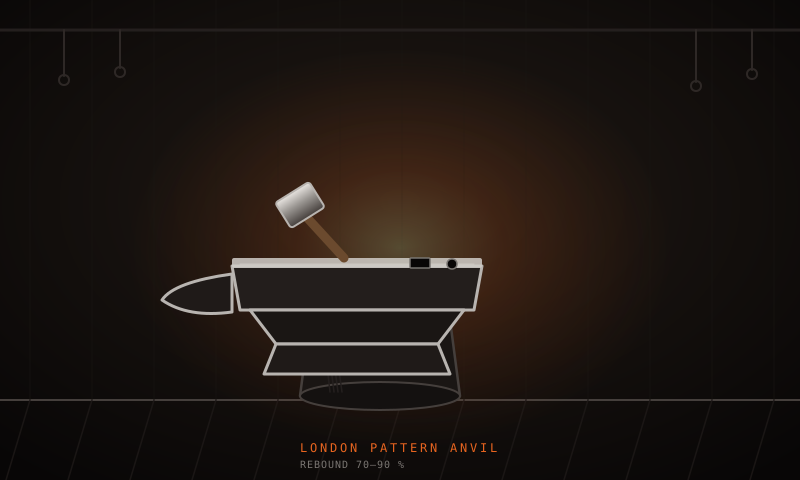
Setting Up a Home Forge
Where you put the forge matters more than which forge you buy. This covers siting and ventilation, gas versus coal, anvils and stands, tooling, quench setup and a layout that works in a small shop.
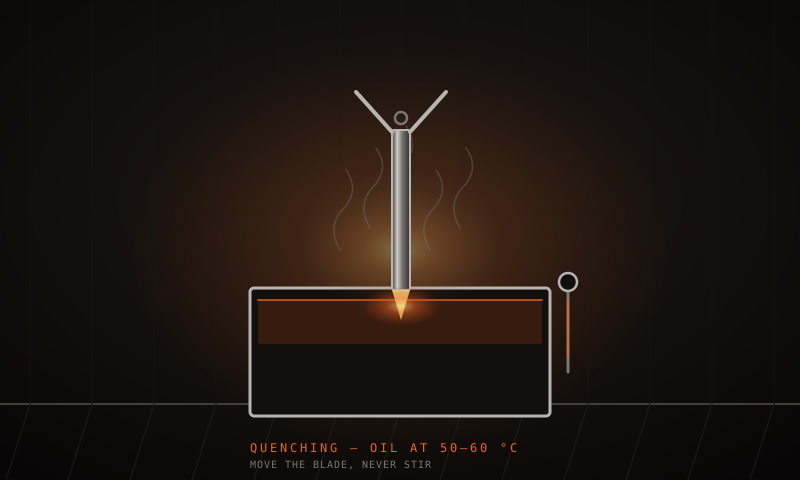
Heat Treatment Explained: Quenching and Tempering
Hardening is a race between two transformations. Get the temperature and the quench right and the steel becomes martensite. Get them wrong and it stays soft. Here is the sequence that works, with real numbers.
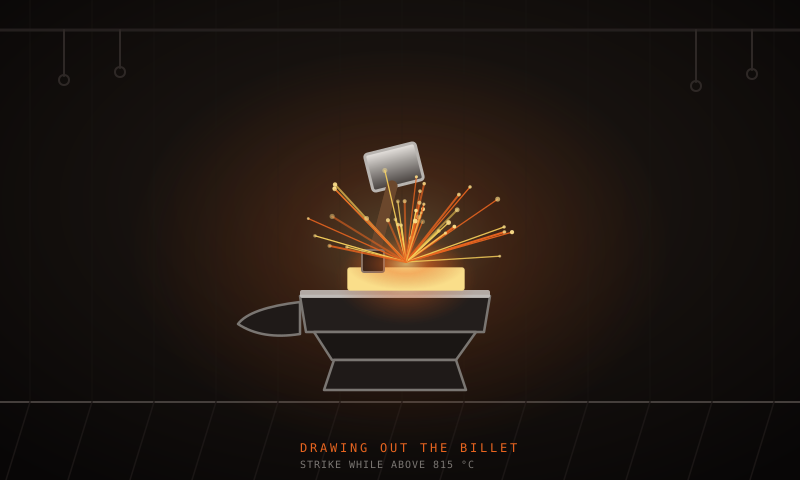
Forging Basics: Heating, Hammering, and Shaping
Forging is not about hitting hard. It is about heat, hammer control and knowing when to stop. This covers the working temperatures, the hammer work, and the faults that show up in every beginner blade.